


Introduction: The Why Behind FarmSay
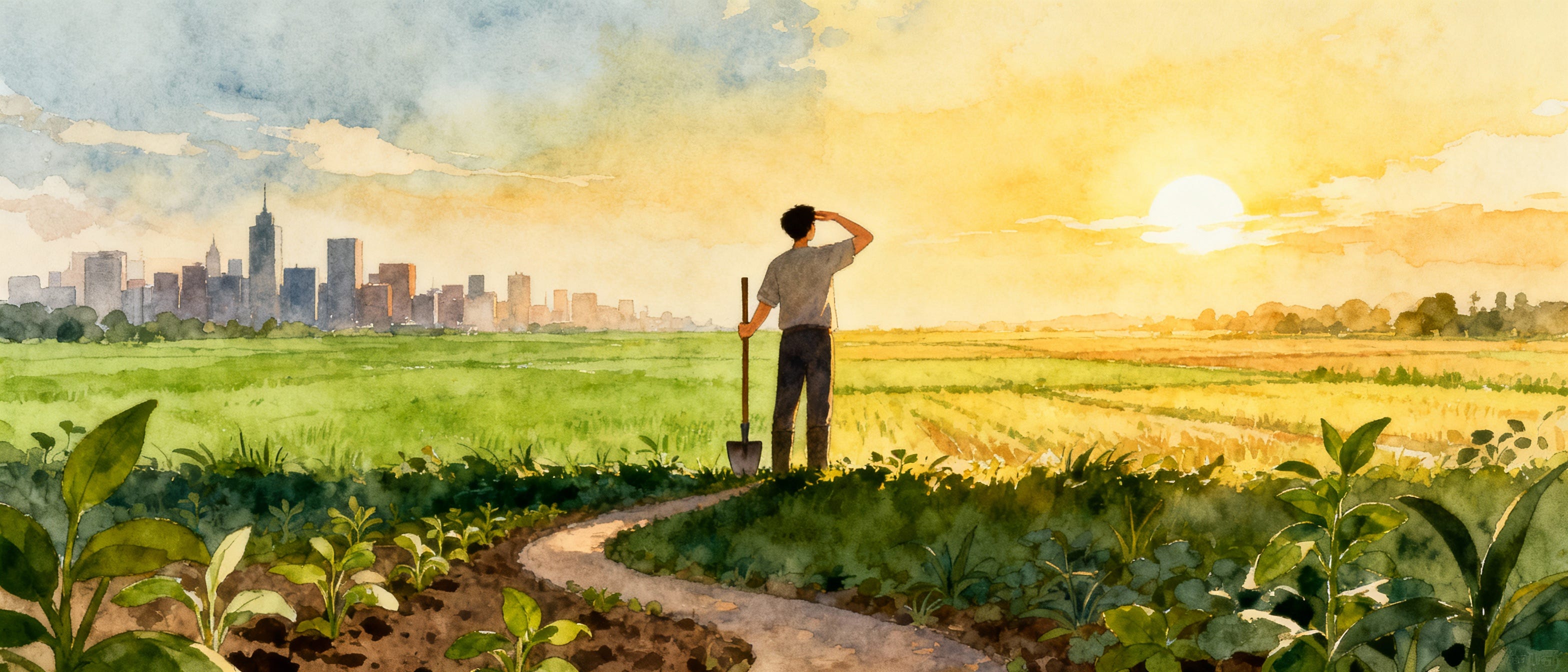
Why FarmSay? I’m putting my thoughts out into the open to see, on the spectrum of insane and brilliant, where this journey could lead – in both life and career. In corporate life, we are coached and coaxed onto “plans” if we don’t take ownership of our trajectories. Farming demands the opposite mindset: the first lesson is letting go of the need to owning everything or the ability to control anything. Dealing with nature means; it is in a way, a surrender to being nurtured by nature and its rhythms.
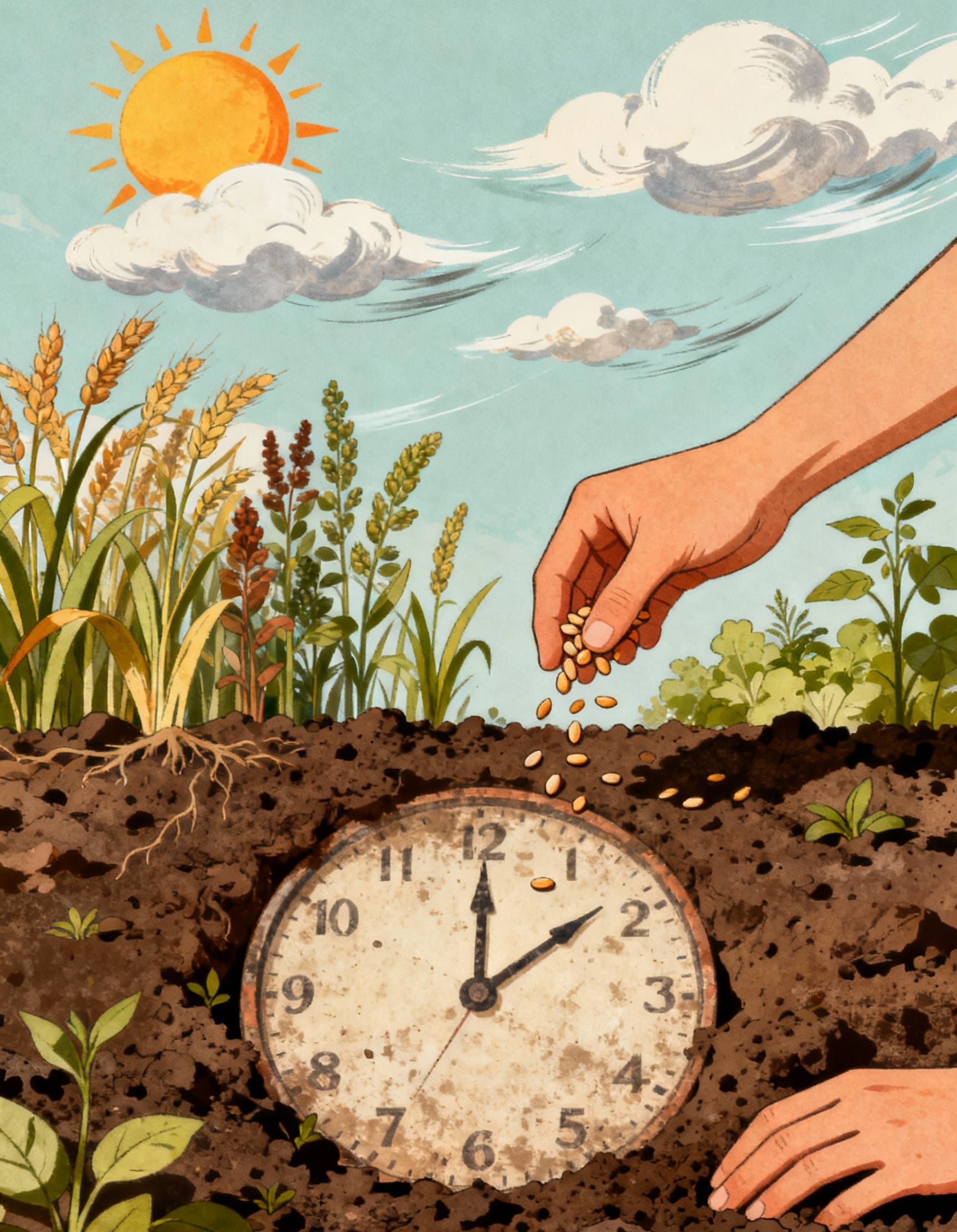
Speaking of rhythm, I’ve read that one of the drawbacks of not having a work schedule is that we become lazy and chase dopamine hits. What better way to get into a meaningful rhythm than to be guided by nature? At the risk of romanticizing it, following the schedule dictated by seeding, watering, and other natural cues often produces mixed results at best. Mainly because of the vagaries of nature and human error. Even though terms like precision agriculture maybe a buzzword now, but in a country as diverse as ours, can it even be scaled reliably?
Reflection on Corporate Life and Productivity
Yes, it’s not assembly line work or booking the next business trip. As humans, is our productivity bonded to brand names and job titles? Even “corporate warlords” are encouraged to explore vocations outside work, supposedly to sharpen them upon returning to the cubicle. In reality, much of office life is about optimizing for a Monday-to-Friday routine and crafting cheeky introduction slides.
I am also getting to realize – productivity is not measured by the number of hours hooked on to the headset or the number of lines of code written. Even as part of Life Lessons heard this: while we were hunter gatherers, we are designed for short bursts of activity between self-energy conservation and other pursuits. Not for extended periods at factories or desk work. Or the contrary point, did we condition ourself that way? That corporates are trying to re-wire us for the good. (Note to self: I’ll read more on that.)
Purpose: Balancing Mission with Business
To flesh out purpose: I am starting with building a proof of concept for our family. To improve nutritional richness starting from our own plates.
Areas I am trying to address:
· Bridge my knowledge & skill gap – starting small with an NFT (Nutrient Film Technique) system. A 54 planter two tier system.
o Have to figure-out ongoing supply of seeds. Purchase Vs saving from produce
o Have to establish output. Is it repeatable? What worked well, what didn’t? why? Where is the input Vs output going to be tracked?
o Seasonality – which season produces the best and how much.
o Determine what’s success Vs prolonged trials phase
· Building market linkages – from above POC will get realistic forecast on excess produce. Initially any additional will be distributed to immediate family. Over and above, to premium clients at the salons.
o Will this trigger a demand? Will I be able to cater to the demand? Will the demand be skewed to particular items? Catering to demand Vs chase a niche.
o Pricing – how long after initial phase of trials should we determine price?
Motive /Emotive:
Beyond the day-to-day experiments and business logistics, it’s often the underlying motivations and emotions that influence how I navigate challenges and define success. I am a novice and nervous to speak of systems like Socialism Vs Capitalism etc. I have oft heard an anecdote that at one point PM Nehru saying “Never talk to me about the word profit; it is a dirty word.”
Profit motive is a difficult topic to breakthrough when it comes to sustainability. Farming and food production are looked at primarily for subsistence or passion, not as a profit-making business. Can it be scaled? Yes, but not in the traditional ways of business. Realistically, the labor and sheer number of households required to build a solid Agri economy is massive.
The emotive side tends to peek thru; considering the number of emotions there are. If I ask myself, if this is an emotional decision. Emotions were definitely part of the process, but not ones like envy, anger or shame. I have to keep reminding myself not to let them have a major say in the future too.
Next Steps: Ownership and Action
Ultimately, it’s action that matters. By owning the process and outcomes, committing to learn, and seeking genuine collaboration, I hope these experiments spark a ripple—starting at home, growing outward, and challenging how we think about food, work, and meaning. I’ll keep exploring new ways to connect supply and demand. I invite others to join, question, and build alongside me.