


Writing this on May 4, looking back at April from the other side of the GCPP viva. It is one of those months where the list of things undone feels longer than the list of things done. Turns out, most of it was groundwork in disguise — hard to see when you’re in the middle of it.
Most of April was centred on my GCPP final project. The submission was due on April 20, which gave me just enough room to prepare for the viva in early May. The project, “Building Energy Resilience in India”, has been a rewarding mix of treating AI as a thinking partner and digging deeper into India’s energy resilience questions. Once things settle, I’ll share it here and see what questions it sparks.
Hydroponics on the terrace
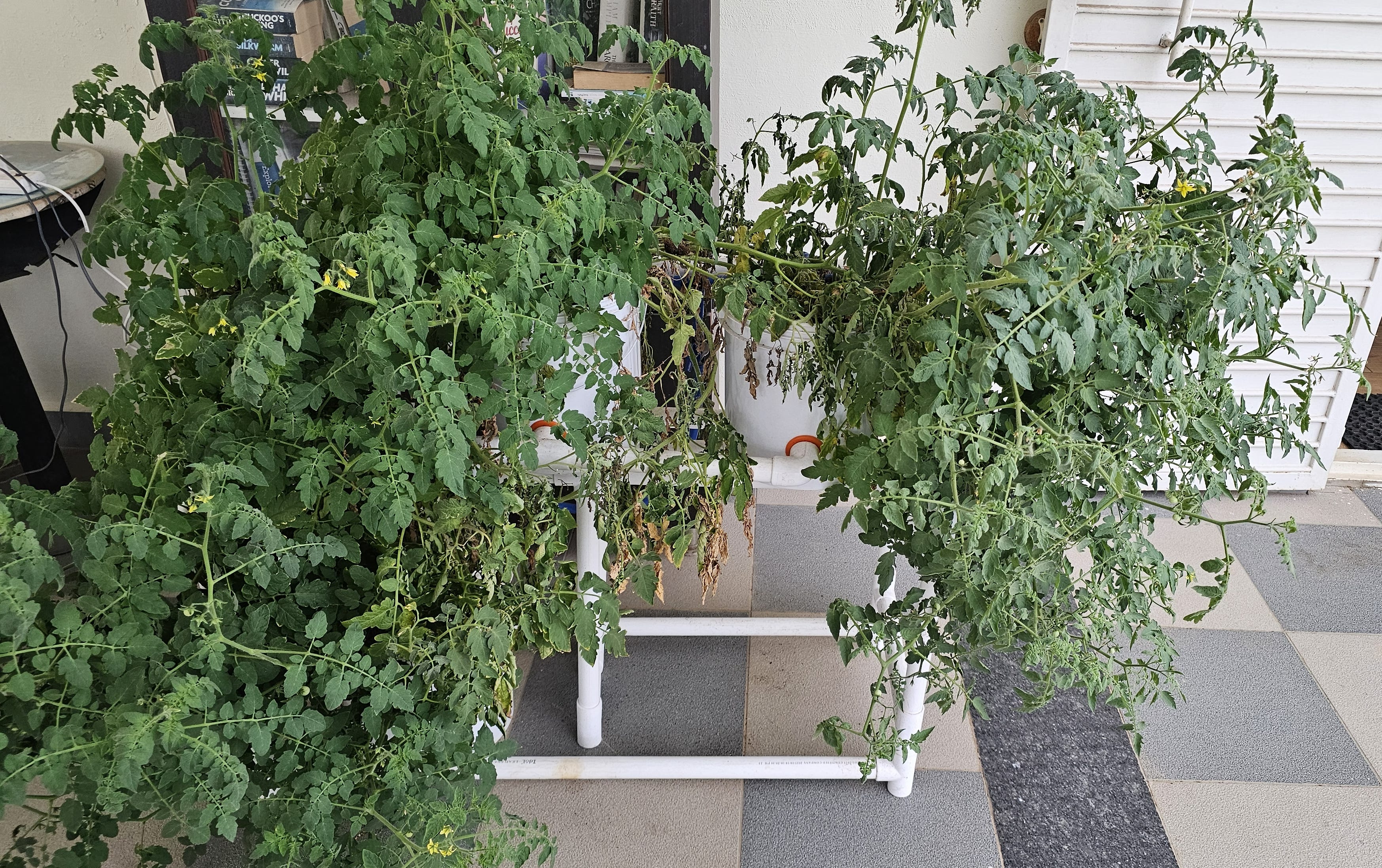
On Ayozari, did a round of summer cleaning after five spinach harvests and sowed a fresh round of seeds. Germination has been noticeably sluggish, which I’m blaming on the heat until proven otherwise. The Dutch bucket tomatoes, meanwhile, have decided to overcompensate: the plants are dense enough now to need serious support, and a few baby tomatoes have started to appear.
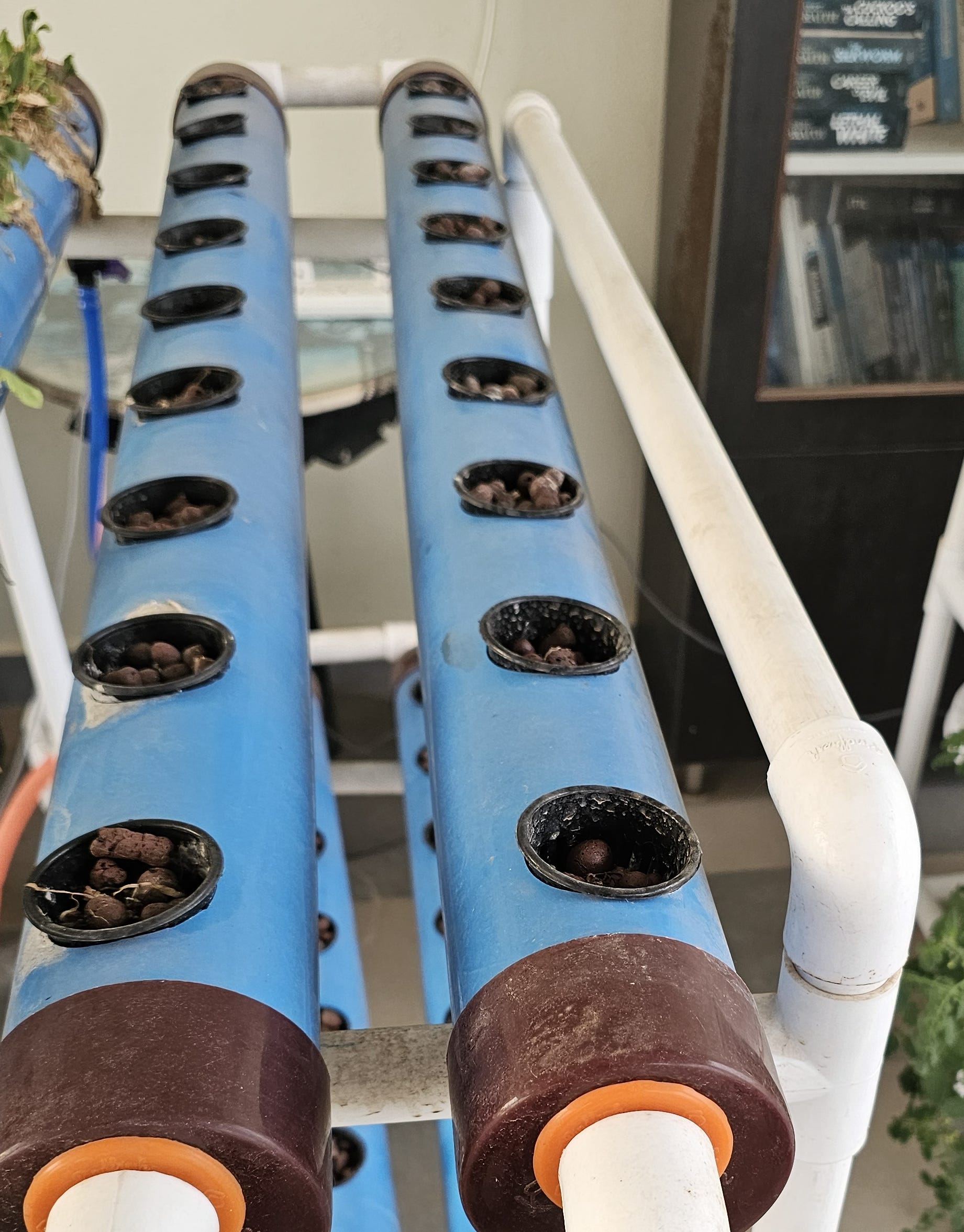
The second aeroponics tower from Homeponics did not share that enthusiasm. Amaranthus germinated well and made it into the net pots, but a gusty, rain-lashed evening knocked several pots out of their grooves and even caused minor damage to Dutch Bucket irrigation line. The tower is now offline while I wait for the worst of summer to pass and have deeper conversations with Homeponics and Pindfresh about aeroponics management from seedlings through mature plants.
That said, it is hard to learn anything if everything always works.
Bees, trays and other small experiments
Outside of the bigger systems, April’s theme was to do less and watch more. The bees mostly got on without me, apart from one sting as a pointed reminder of their presence; I limited myself to topping up sugar syrup and keeping their setup shaded and stable in the heat. This has been less about “doing things” and more about learning when to simply watch. Microgreens continued as low-stakes practice: a few batches went through, with chia leading the pack, followed by onion and pea, and the rest gently underlining how many repetitions it takes to turn reading into reliable results.
Sheep, goats and mushrooms
On the small ruminants front, conversations to participate in an existing business moved into “advanced but not yet final” territory. There is still a fair bit of due diligence and paperwork ahead, so for now this sits firmly in the background rather than as an announcement. If things go to plan, I should have a more concrete story to tell over the next few months.
After a long wait, there was finally some traction from the Horticulture Department on mushroom cultivation. It is early days, but it feels like the first nudge after a long pause. May’s lookback will have more to share than ‘emails were exchanged’.
Wrapping up
Seeman’s NTK may have drawn a blank this time, but I hope their ideas especially on sustainable agriculture get far more traction. Because the potential for genuine change feels too important to be confined to one election, one leader, or even one state.